
Automated WhatsApp Rent Reminders Before and After the Due Date
Build a WhatsApp rent reminder sequence that reaches tenants before, on, and after the due date — with less manual chasing, cleaner receipt checks, and timely landlord updates.
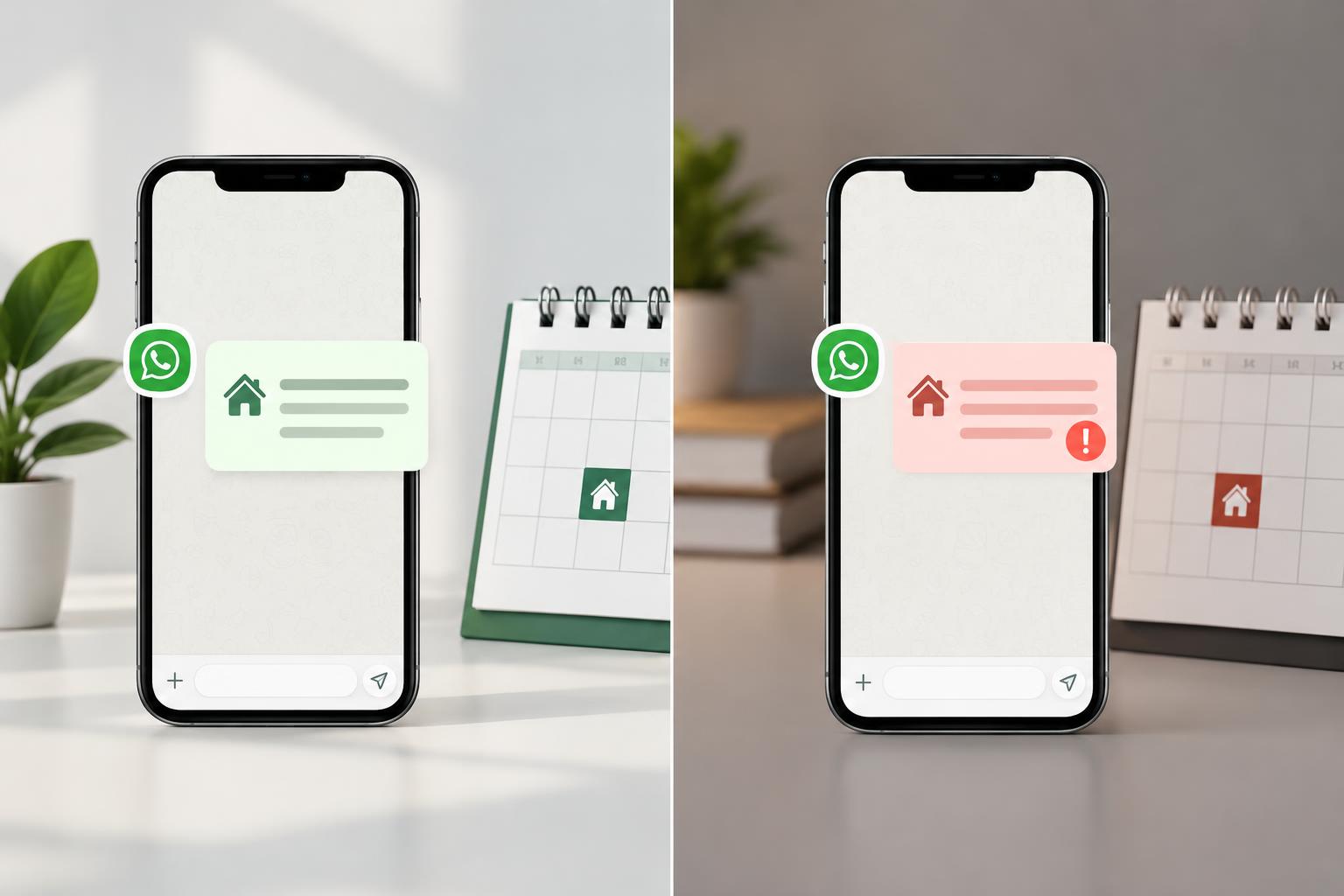
Turn rent reminders into a predictable sequence
Late rent is rarely solved by sending more messages. It is solved by sending the right message at the right time, from a channel tenants already use. For Saudi property teams, an automated WhatsApp sequence before and after the due date can replace manual follow-ups, create a clear record, and make collections easier to manage.
Maktabi's approach is built around that idea: reminders are scheduled from the lease, sent from the agency's WhatsApp number, and connected to receipt checks, invoices, and landlord updates. The operational win is simple — fewer calls, fewer missed follow-ups, and a cleaner month-end.
Why timing beats message volume
Manual collection breaks down when reminders depend on someone remembering to send them. A scheduled sequence sets expectations early, gives tenants a direct way to pay, and escalates only when needed.
It also gives property managers, finance leads, and accountants one shared record of what was sent, when, and how the tenant responded. That matters when a tenant says they never received a reminder, or when a landlord asks why a unit is still in arrears.
Consistency is the point: a tenant should know what is coming before the due date, what to do on the due date, and what happens if payment is late.
Before the due date: make payment easy
The first reminder should arrive several days before rent is due. Timing can vary, but the message should include the exact amount, due date, unit and property, and a clear payment path — a payment link, transfer instructions, or both.
In Maktabi, creating a lease schedules reminders for every upcoming rent cycle. You configure how many days before the due date to send the first message, the preferred send time, and the channel, with WhatsApp as the default. The pre-due reminder uses an approved template and includes the tenant name, unit code, property, amount, and due date. The tone is friendly and informational.
Before you switch on the sequence, check lease dates, rent amounts, tenant numbers, and payment instructions. A reminder that reaches the wrong number or quotes the wrong amount creates more work than it saves. Also suppress reminders when a payment is already confirmed; no tenant should receive a chase message after paying.
On the due date: keep it direct
If rent is still pending on the morning of the due date, send a short, polite reminder. Maktabi sends this message on the due-date morning, with a configurable time and a default of 09:00. Confirm the amount, include the payment link, and tell the tenant how to send proof if they have already paid by transfer.
Tenant replies should not sit on a personal phone. Maktabi's AI classifier categorises inbound messages as payment confirmation, payment promise, extension request, dispute, or bank details request. That helps your team route each reply to the right person instead of treating every message as a collection call.
After the due date: escalate without losing the record
If payment has not arrived, send an overdue notice the day after the due date, during business hours. Keep it firm and professional. Restate the amount, original due date, payment link, and next step. Avoid vague threats, made-up penalties, or promises the lease does not support.
In Maktabi, the overdue notice goes out the day after the due date and the tone escalates automatically. If your agency needs additional follow-up, define those escalation rules in your collections policy rather than leaving them to individual staff.
When a tenant replies with a bank transfer receipt, Maktabi uses OpenAI Vision to read the amount, date, and reference, then matches the receipt against the open rent cycle. The agency receives a notification with the analysis result.
That is a useful receipt-matching step, not a replacement for reconciliation. Treat a screenshot as evidence to review, not proof that funds have cleared. Confirm the transfer against your bank or payment gateway before closing the cycle.
When payment lands: close the loop
A collection process is not finished when the tenant pays. It is finished when the payment is matched, the invoice is issued, and the landlord can see what happened.
Maktabi connects online payment links to your licensed payment gateway. When a gateway confirms a payment, a webhook marks the rent cycle as paid and pauses pending reminders. A ZATCA Phase 2 compliant invoice is generated with the required VAT and QR details and synced to Zoho Books. After the management fee is deducted, the landlord receives a WhatsApp transfer notification showing the net amount, unit, and payment period.
That handoff matters: finance does not re-key the payment, the tenant gets a compliant invoice, and the landlord gets an update without calling the agency.
What Maktabi provides
Maktabi is a real estate ERP and rent collection platform for Saudi agencies. Its rent collection workflow includes four reminder types — upcoming, due today, overdue, and landlord transfer — sent from the agency's own WhatsApp Business number. Messages use approved bilingual templates, and the connection runs through 360dialog or your WABA account. Every message, reply, approval, and payment confirmation is logged against the tenant, unit, and lease.
The platform also covers payment links, receipt analysis, ZATCA e-invoicing, and landlord updates in one workflow. A Free plan is available, and the homepage lists Professional at 498 SAR per month and Business at 999 SAR per month with different property and unit limits. Check current plan details before choosing the tier that fits your portfolio.
A practical launch checklist
- Clean your lease data before switching on reminders.
- Approve WhatsApp templates in Arabic and English.
- Set reminder timing, send windows, and suppression rules for paid cycles.
- Route tenant replies to a shared inbox, not individual phones.
- Test payment links and receipt handling in test mode.
- Define who reconciles payments and who approves exceptions.
- Review on-time collection and unresolved disputes weekly.
The best rent reminder sequence is predictable: clear before the due date, direct on the due date, firm after it, then a clean payment-to-invoice-to-landlord handoff. Automate the timing, keep judgment with your team, and collections become faster with less chasing.